Sea Animal Substraction Math Worksheets: A Practical Resource for Early Math Learning
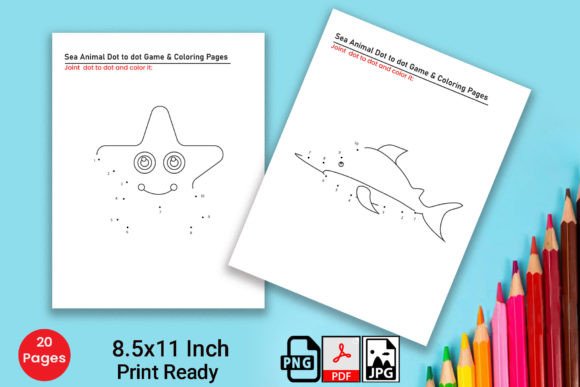
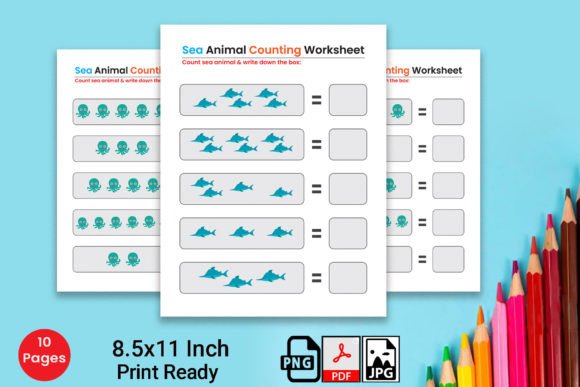
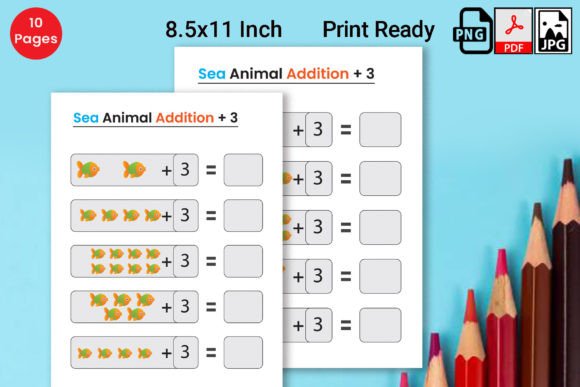
Sea Animal Substraction Math Worksheets are printable educational tools designed to support foundational subtraction skills in young learners—typically ages 4 to 8. Unlike generic math drills, these worksheets embed subtraction problems within an ocean-themed visual context: students solve equations featuring dolphins, octopuses, sea turtles, starfish, and other marine creatures. The integration of thematic illustration with arithmetic serves a dual purpose—it reinforces number sense while sustaining attention through relatable, low-stakes imagery.
How These Worksheets Support Conceptual Understanding
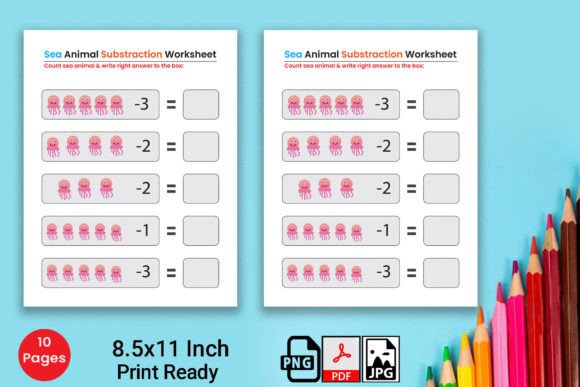
Effective early math instruction relies on more than rote practice. Research in mathematics education emphasizes the value of concrete-to-abstract progression—starting with tangible or pictorial representations before moving to symbolic notation. Sea Animal Substraction Math Worksheets align with this principle by using sea animal icons as manipulatives. For example, a problem might show five whales with two swimming away, followed by the equation “5 − 2 = ?”. This visual scaffolding helps children connect the operation to real-world actions (taking away, separating, comparing), supporting deeper conceptual understanding rather than procedural memorization.
The resource includes 10 unique worksheet designs—each with varying levels of complexity. Some focus on single-digit subtraction within 10; others introduce missing subtrahends or simple word-style prompts (“Three crabs were on the rock. One crawled away. How many are left?”). This intentional progression allows educators and caregivers to differentiate instruction based on individual readiness—not just age or grade level.
Format Options and Practical Utility
This product delivers three complementary file formats: PDF, JPG, and PNG—each serving distinct use cases.
- PDF pages are optimized for home or classroom printing: no bleed, high-resolution, KDP-tested margins, and ready-to-use layout. They’re ideal for immediate physical distribution or binding into workbooks.
- JPG files offer flexibility for digital learning platforms—teachers can import them into interactive whiteboard software or learning management systems like Google Classroom for annotation or guided practice.
- PNG files include transparent backgrounds, making them suitable for custom lesson design—such as layering onto slides, embedding in digital flashcards, or adapting for assistive technology tools that require clean image isolation.
This multi-format approach addresses diverse teaching environments without requiring additional editing or conversion. It’s especially helpful for hybrid settings where educators alternate between printed handouts and screen-based instruction.
Comparing With Other Math Practice Resources
Not all subtraction worksheets deliver equal pedagogical value. Generic drill sheets often prioritize volume over clarity—presenting rows of isolated equations without context or visual support. In contrast, Sea Animal Substraction Math Worksheets integrate narrative and imagery deliberately, reducing cognitive load for emerging readers and English language learners. The sea theme also avoids gendered or culturally narrow stereotypes sometimes found in holiday- or toy-based alternatives.
Compared to commercial math apps or subscription-based platforms, these worksheets offer offline accessibility, zero screen time requirements, and full control over pacing and repetition. There’s no algorithmic adaptation—but also no data tracking, login barriers, or device dependency. That makes them especially appropriate for families limiting screen exposure, educators in low-bandwidth settings, or therapists incorporating tactile learning strategies.
However, they do not replace dynamic instruction. Worksheets alone won’t address misconceptions about inverse operations or number bonds unless paired with discussion, modeling, or hands-on materials (e.g., counters, number lines, or ten frames). Their strength lies in reinforcement—not initial concept introduction.
When Sea Animal Substraction Math Worksheets Fit Best
These worksheets are most effective in specific, well-defined contexts:
- Targeted skill practice: When a child understands subtraction conceptually but needs repeated, low-pressure opportunities to build fluency and confidence with facts up to 10.
- Thematic units: During ocean studies, marine science lessons, or cross-curricular projects where math connects meaningfully to content-area learning.
- Differentiated small-group work: Teachers can assign specific pages based on observed needs—e.g., one student works on visual take-away problems, another progresses to equations with unknowns.
- Home learning consistency: Parents seeking structured, print-and-go activities that mirror classroom approaches without requiring lesson planning.
They’re less suited for learners needing intensive intervention (e.g., those with dyscalculia who benefit from multisensory, movement-based strategies) or for advanced learners ready for two-digit subtraction or regrouping. In those cases, supplemental resources—like base-ten blocks, adaptive apps, or guided problem-solving tasks—would be necessary complements.
Realistic Use Cases and Implementation Tips
A first-grade teacher used four Sea Animal Substraction Math Worksheets during a week-long ocean unit. She projected the JPG versions for whole-class number talks, asking students to describe what was happening in each scene before writing the equation. Later, she printed the PDFs for independent seatwork and laminated a set for center rotation with dry-erase markers. Students enjoyed circling sea animals to model subtraction physically—a subtle but meaningful bridge between pictorial and abstract thinking.
A homeschooling parent reported using the PNG files to create personalized flashcards in Canva, adding voice notes via QR codes for self-paced review. Another educator embedded the images into a simple Google Form quiz, pairing each problem with a multiple-choice response and instant feedback—demonstrating how static worksheets can extend into interactive formats with minimal effort.
Limitations and Considerations
While thoughtfully designed, Sea Animal Substraction Math Worksheets have boundaries worth acknowledging:
- They cover subtraction only—no addition, multiplication, or mixed operations. Educators seeking broader arithmetic coverage will need supplementary materials.
- The sea theme, while engaging, may not resonate equally across all cultural or geographic contexts. Some learners may have limited familiarity with marine life, potentially diluting the contextual benefit unless paired with brief background discussion.
- There is no built-in assessment or progress tracking. Users must observe, record, and interpret performance manually—valuable for responsive teaching, but requiring educator time and attention.
Also, because the files are digital downloads—not editable templates—customization (e.g., changing numbers, swapping animals, adjusting font size) requires graphic design software and technical comfort. That’s a tradeoff for out-of-the-box usability.
Making an Informed Choice
Selecting math practice resources involves weighing instructional goals against practical constraints: time, access to technology, learner profiles, and alignment with broader curriculum goals. Sea Animal Substraction Math Worksheets stand out for their clarity of purpose, visual coherence, and format versatility. They fill a specific niche—supporting early subtraction fluency through accessible, themed, print-ready practice.
If your priority is building automaticity with foundational facts in an engaging, low-tech, adaptable way, they’re a strong candidate. If you need diagnostic tools, adaptive difficulty, or comprehensive skill coverage, consider combining them with other evidence-informed approaches—like number talks, games, or formative assessments.
For educators and caregivers who value intentionality over novelty—and who understand that effective learning tools don’t need to be flashy to be useful—Sea Animal Substraction Math Worksheets offer quiet, consistent utility. They reflect a grounded understanding of how young children learn math: not through repetition alone, but through meaningful, scaffolded, and visually supported experience.