Chocolate Backgrounds for Covers
Choosing the right cover for a coloring book is more than aesthetics—it’s about first impressions, market positioning, and emotional resonance. A well-designed cover signals quality, intention, and audience alignment before a single page is turned. That’s where Chocolate Backgrounds for Covers becomes a practical asset—not just another design pack, but a curated solution built for real-world publishing workflows.
Why background choice matters—especially for coloring books
Unlike fiction or nonfiction titles, coloring book covers serve dual roles: they must attract browsers on Amazon or in stores *and* communicate the experience inside. A cover with a soft cocoa-toned background, rich texture, and subtle warmth conveys relaxation and indulgence—qualities readers actively seek in adult coloring products. It subtly reinforces themes of self-care, mindfulness, and creative pause without relying on clichéd florals or overused mandalas. This isn’t decorative filler; it’s strategic visual language.
Designed for function—not just flavor
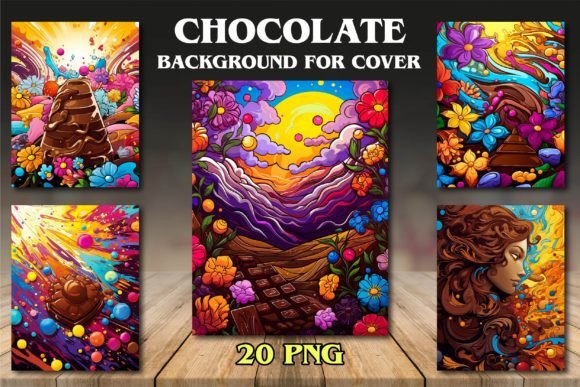
The Chocolate Backgrounds for Covers collection includes 20 distinct designs, each delivered as a high-resolution PNG file at 300 DPI. That resolution isn’t arbitrary—it’s the industry standard for professional print output, especially for KDP (Kindle Direct Publishing), where pixel clarity directly impacts perceived value. Blurry or upscaled covers often get scrolled past in under two seconds. These backgrounds eliminate that risk. They’re sized to fit standard coloring book dimensions (8.5" x 11", 7" x 10", and similar), so no guesswork is needed when placing title text or author names.
Because they’re PNGs with transparent layers where appropriate—and clean, neutral tonal ranges—they integrate seamlessly with typography tools like Canva, Adobe Express, or Affinity Publisher. You’re not fighting clipping masks or color shifts. You’re layering, adjusting contrast, or adding foil-effect text with predictable results.
Who benefits most—and how
Self-publishers on Amazon KDP gain immediate efficiency. Launching a new coloring book every 4–6 weeks? Reusing the same cover template across themes (e.g., “Botanical Chocolate,” “Geometric Cocoa,” “Vintage Dessert”) builds brand recognition while reducing design time. With 20 options, you can rotate styles by season or audience segment—keeping your catalog fresh without hiring a designer for every release.
Educators and therapists creating custom activity books for clients or classrooms find these backgrounds especially useful. A warm, grounded chocolate tone feels calming and inclusive—less clinical than stark white, less overwhelming than saturated color. One school counselor reported using a muted cocoa linen-textured background for a stress-management workbook; students consistently described the cover as “quiet” and “safe”—a subtle but meaningful cue before opening the first page.
Small print shops and local retailers appreciate the flexibility. Since each file is print-ready, there’s no need for costly prepress adjustments. Whether producing spiral-bound journals for boutique gift shops or bulk-printing for wellness fairs, the consistency across the set ensures cohesive shelf presence—even across different interior themes.
Thoughtful limitations—and when to look elsewhere
These are backgrounds—not full covers. They don’t include pre-placed titles, subtitles, or marketing blurbs. That’s intentional: it preserves creative control and avoids copyright complications with embedded fonts or stock illustrations. If you need turnkey, ready-to-upload covers with complete layout, this isn’t the solution. Likewise, if your project requires CMYK-optimized PDFs for offset printing (rather than KDP’s RGB-friendly PNG workflow), you’d need to convert files carefully—or consult a print specialist.
Also worth noting: while AI-generated, these images were refined with human art direction—prioritizing tactile depth, balanced negative space, and tonal harmony over novelty. You won’t find surreal chocolate waterfalls or literal candy landscapes. The focus stays on sophistication and usability—ideal for audiences who value subtlety over spectacle.
Real use cases—beyond the download
A freelance illustrator used three Chocolate Backgrounds for Covers to launch a series of themed journals: “Cocoa & Calm” (for anxiety support), “Mocha Moments” (for busy professionals), and “Dark Roast Reflections” (for journaling prompts). By keeping the background palette consistent but varying textures—matte, linen, and subtle grain—she created visual continuity across her brand while allowing interior content to drive differentiation.
A homeschool co-op repurposed one of the backgrounds as a printable header for weekly mindfulness handouts. Printed on cream-colored paper, the warm tone softened the formality of academic materials—making breathing exercises and gratitude prompts feel more inviting to tweens and teens.
And a small publisher testing niche markets used five different backgrounds to A/B test Amazon thumbnails. They discovered that covers with gentle gradient transitions (rather than flat tones) had 18% higher click-through rates among users aged 35–49—likely because the soft depth suggested richness without visual noise.
Supporting deeper creative goals
Cover design shouldn’t drain energy better spent on interior illustrations or audience engagement. With Chocolate Backgrounds for Covers, the goal is to remove friction—not add complexity. When you spend less time troubleshooting resolution mismatches or sourcing royalty-free textures, you reclaim hours for refining line art, writing thoughtful introductions, or researching what resonates with your specific audience.
There’s also a quiet psychological benefit: working with cohesive, intentionally warm visuals supports your own creative stamina. Designing under pressure often leads to rushed decisions or visual fatigue. Having a reliable, aesthetically grounded starting point helps maintain momentum—and reminds you why you began creating in the first place.
Final note on integration
These backgrounds work best when treated as foundational elements—not standalone decorations. Pair them with legible, moderately weighted fonts (avoid ultra-thin or overly decorative typefaces that compete with the texture). Leave ample margin for KDP’s bleed requirements. And always preview your final cover at actual size on both desktop and mobile—what reads as elegant at 100% zoom may vanish in a crowded Amazon grid.
In short, Chocolate Backgrounds for Covers offers more than variety. It delivers consistency, technical reliability, and thoughtful tonal intelligence—all in service of helping your coloring book connect meaningfully with the people who need it most.